Homemade Beshbarmak with Tender Beef and Clear Broth
A traditional Central Asian dish of boiled beef served over thin wheat noodles with an onion topping and rich broth.
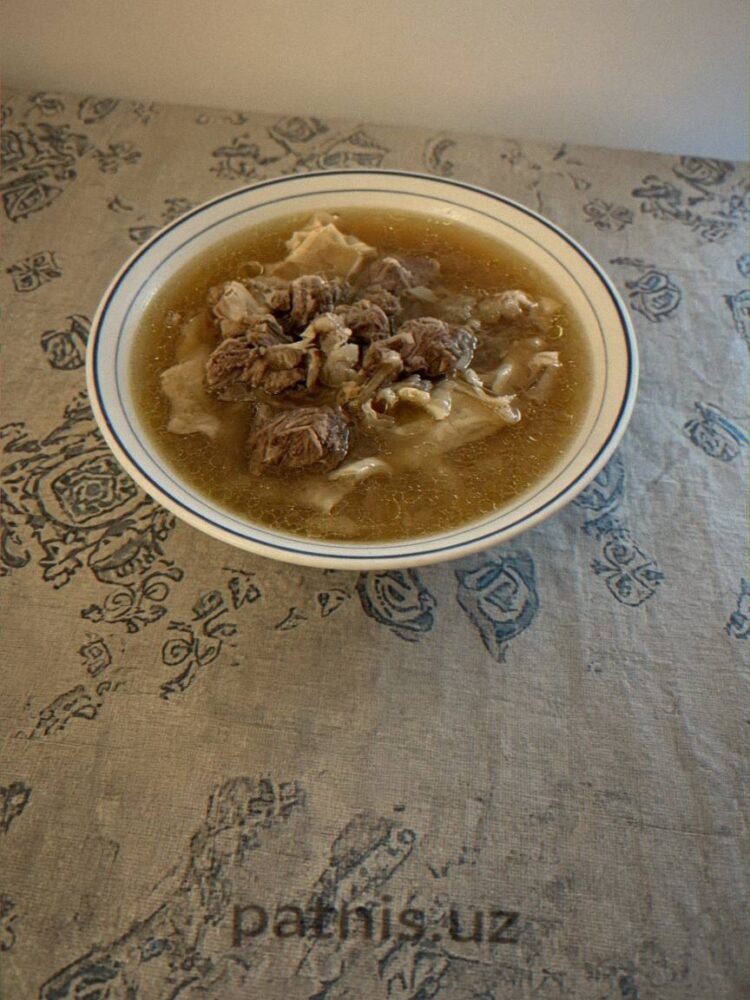
Beshbarmak is an ancient staple of nomadic cuisine that relies on patience and good ingredients. Making it properly means starting with quality meat and simmering it slowly to build a rich, clear broth that ties the whole dish together.
Why make it from scratch at home
Making your own noodles and simmering a fresh broth transforms the texture of the dish. You also control the exact cut of meat and the salt level.
- Adjust the meat quantity to fit your household size.
- Roll the noodle dough to your preferred thickness.
- Serve the fragrant broth in separate bowls on the side.
Nutrition
Per serving (≈ 450 g). Approximate values.
How to make it
7 steps · start a timer right inside a step
Boil the meat
Cut the beef into large chunks and place them in a pot with cold water. Bring to a gentle boil over medium heat and skim off all the gray foam from the surface. Lower the heat, add the salt, and toss in the whole onions.
Mix the dough
Sift the flour into a bowl, make a well in the center, and add the egg, salt, and lukewarm water. Knead into a stiff dough until it feels smooth and elastic. Cover it with plastic wrap and let it rest.
Roll out the noodles
Roll the rested dough out on a floured board with a rolling pin until it is about two millimeters thick. Cut it into diamond shapes roughly five centimeters wide. Spread the pieces out on a clean kitchen towel to dry slightly.
Make the onion topping
Place the sliced onion rings in a deep bowl. Add the butter or fat skimmed from the pot, sprinkle with black pepper, and ladle a spoonful of the boiling broth over the top. Simmer gently on low heat until the onions turn soft.
Slice the meat
Check the meat after its long simmer; it should pull away from the bone easily. Take it out of the pot, let it cool down slightly, and slice it into thin strips. Strain the remaining broth to keep it clear.
Cook the noodles
Drop the cut noodle pieces into the rolling broth in the pot. Cook them over medium heat until they float to the surface and turn completely tender.
Assemble the dish
Arrange the cooked noodle pieces in an even layer across the bottom of a wide serving platter. Place the sliced beef right on top. Finish by spooning the prepared onion relish and herbs over the center.
Cook’s tips
- 1Skim the foam right as it forms during the boil to keep your broth clear.
- 2Do not roll the dough too thick, or the noodles will taste heavy and take too long to cook through.
- 3Simmering the onions briefly with a ladle of broth makes them tender rather than sharp.
- 4Always serve the remaining hot broth in separate bowls at the table.
Serving & storage: Present this on a wide, shallow platter with the meat and onions mounded in the center. Leftovers can be kept in the refrigerator for up to three days, but it is best to store the broth and noodles in separate containers and reheat them by quickly dipping the noodles in boiling water.
How to serve it
Layer the warm noodles on a wide serving platter, top them with the sliced meat, and finish the center with the softened onion relish.
- Store leftover meat and noodles in the fridge for up to 2 days.
- Garnish with fresh herbs right before serving if you like.
The bottom line
Beshbarmak takes time, but breaking it down into simple steps keeps it manageable. Getting the meat tender and resting the dough are the two keys to success.
- Adding too much water to the pot dilutes the flavor of the broth.
- Letting the dough rest makes rolling it out much easier.